Case Study
UCLA: Come Join Us
Client: UCLA Division of Physical Sciences
Format: Main documentary film + five profile films
Duration: 4 minutes (main film) + approx. 1:30 each (profile films)
Location: Los Angeles, California
Scope: Story development, production, directing, cinematography, interviews, and post-production
UCLA’s Division of Physical Sciences is home to researchers tackling some of the most fundamental questions in science, from climate and chemistry to mathematics, physics, and astronomy. Its faculty and students have contributed to discoveries with an impact far beyond the university, but the breadth of that work can be difficult to capture in a single story.
As UCLA marked its centennial, we were commissioned to create a short documentary and profile series that would bring the human side of that work into focus for prospective students, faculty, supporters, and a broader public.

UCLA: Come Join Us - Main Documentary (4 min.)
The Challenge
UCLA had a lot to communicate. The division wanted audiences to understand what physical sciences are, why they matter, and the impact they have on the world, while representing a community working across six very different departments. Simply covering everything risked turning the film into a catalogue of research and achievements.
Our challenge was to find what connected those different fields and people. Rather than defining science from the outside, we wanted to capture what it actually feels like to pursue it: the curiosity that starts the process, the collaboration that sustains it, the uncertainty that comes with exploring the unknown, and the moments of discovery that make it all worthwhile.
Finding the Story
We began by developing the main film around the shared ideas that connected the division: curiosity, exploration, and collaboration, and the big questions that drive people to keep pushing into the unknown. Our treatment followed those themes across a day in the life of UCLA Physical Sciences, moving from quiet moments of reflection into classrooms, laboratories, fieldwork, and the wider scientific community.
But the story continued to evolve through the pre-interviews. Again and again, faculty and students talked about another side of the scientific process: uncertainty, unexpected results, and the periods of confusion that come before an answer begins to take shape.
Rather than smoothing those moments away, we decided to make them part of the story. The film could still celebrate curiosity and discovery, but acknowledging the uncertainty along the way gave us a more honest picture of what doing science can actually be like.
Beyond the Main Film
From the beginning, the project was conceived as more than a single film. The same faculty and students whose voices shaped the main documentary also became the subjects of a series of individual profiles, giving each story more room to unfold beyond what the main film could hold.
While the main film focused on the shared experience of science, the profiles became much more personal. Alongside their research and day-to-day work, the subjects spoke openly about the experiences that had shaped them: sexual identity and belonging, gender representation in science, working-class and immigrant backgrounds, unconventional paths into academia, and the different circumstances that had influenced how they saw their work and the world around them.
The two formats had distinct editorial roles rather than simply repeating the same story, allowing the project to move between the collective spirit of the division and the individual lives behind it.
The Finished Films
In the finished main film, curiosity and wonder gradually give way to uncertainty and confusion. The pace slows and the tone becomes more solemn, before building again toward the moment when “everything clicks” and discovery takes on a different emotional weight. What begins as a film about science becomes a reflection of the determination and sense of purpose behind the search to understand our world, while the individual profiles bring us closer to the people carrying that search forward.

Michael Hill - Mathematics
From abstract mathematical patterns to questions of identity, representation, and who gets to see themselves as scientists. (1:25)
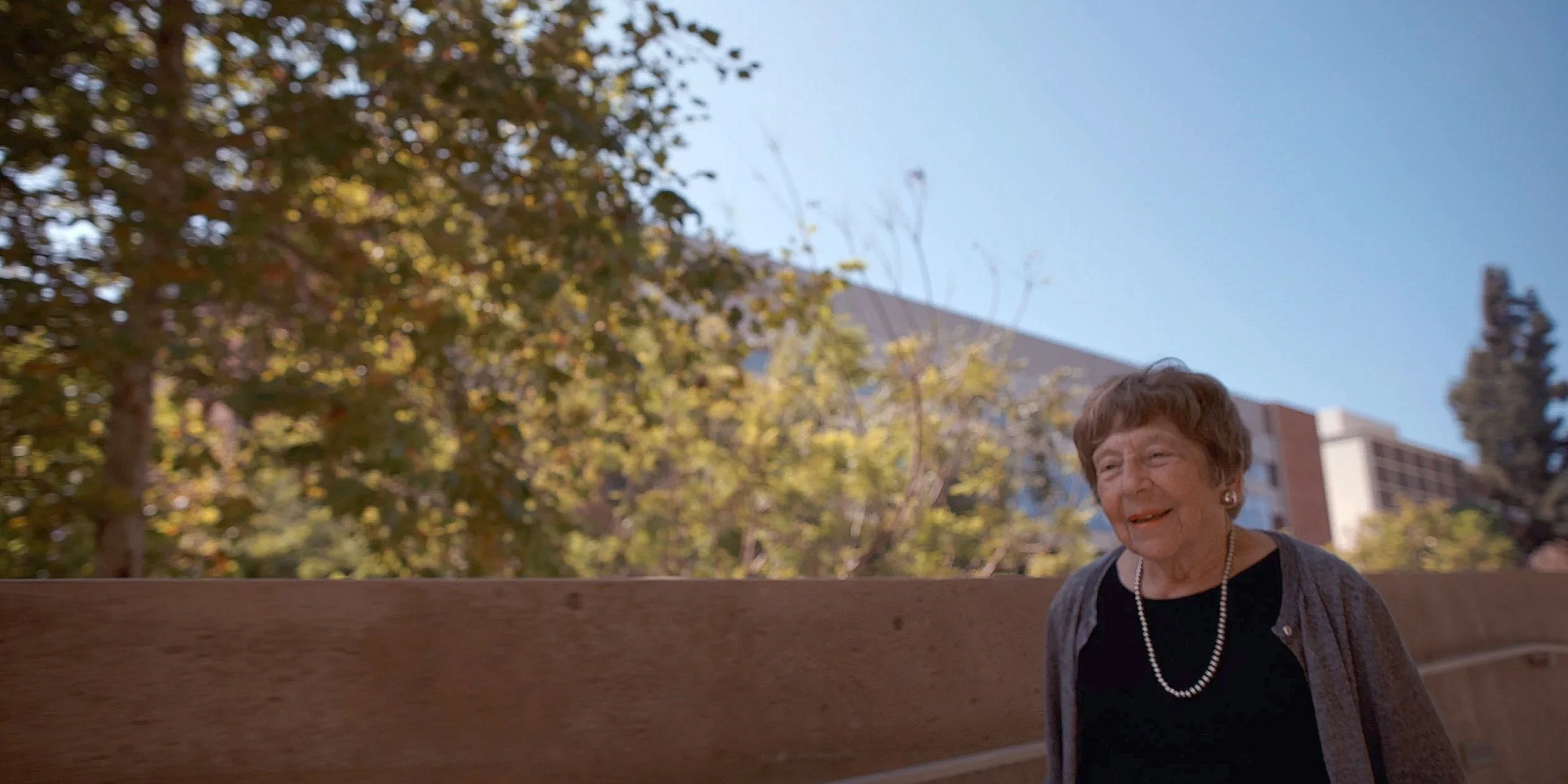
Margaret Kivelson - Earth, Planetary & Space Sciences
Five decades of exploration, discovery, and pushing forward in a field where women were once rarely represented. (1:26)

Alexandrea Arnold — Atmospheric & Oceanic Sciences
Using clues from past climates to better understand the future, while helping make science more accessible to the next generation. (1:15)

Jose Rodriguez & Hosea Nelson - Chemistry & Biochemistry
Exploring the molecular world while reflecting on opportunity, representation, and the unconventional paths that brought them into science. (1:56)
“The creativity in their shooting and interviewing was remarkable. They were fantastic at conducting conversations with our interviewees. That resulted in amazing stories that came out on camera.”
Read the full review on Clutch.
Explore another case study